500 ml





Enter your PIN code to check estimated delivery time.
Gentle, golden, and full of warmth.
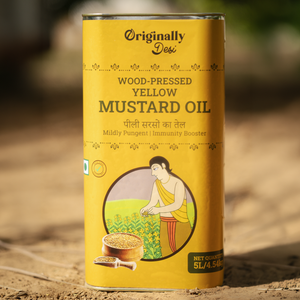
Our Yellow Mustard Oil is mildly pungent, with a nutty undertone and a comforting aroma that feels like home. Pressed from native yellow mustard seeds, it’s a daily essential for the health-conscious kitchen, it lifts the flavours without overpowering them.
Light on the stomach, rich in natural goodness, and easy to love.
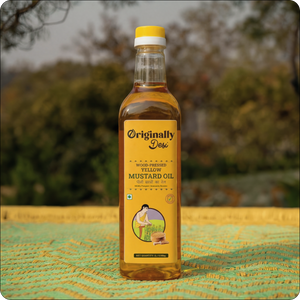
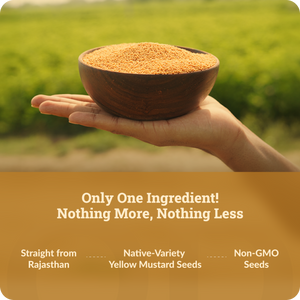
Wood-pressed Yellow Mustard (Brassica juncea) Oil.
1. Cooking Oil Substitute
A flavourful alternative to refined oils for sautéing, frying, and tadkas in Indian kitchens.
2. Lip Treatment
Applied at night to heal dry, chapped lips and improve texture.
3. Earache Relief
A few warm drops (mildly heated) are traditionally used to ease minor ear pain.
4. Rust Prevention
Used to coat knives or metal tools in rural kitchens to prevent rusting.
5. Natural Polish for Wooden Tools
Applied to wooden ladles and boards to keep them conditioned and long-lasting.
Store in a cool, dry place away from direct heat or sunlight.


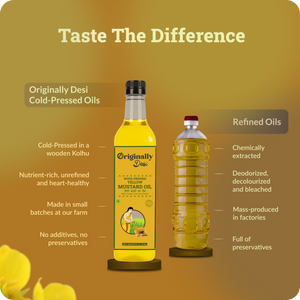
No chemical refining. No artificial neutralising. No dilution.
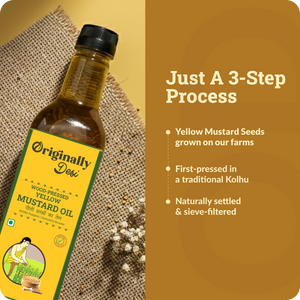
In a category where oils are often processed to mute their personality, we choose to preserve its natural balance. Our yellow mustard oil is wood-pressed slowly to retain its gentle pungency and light texture that fits effortlessly into everyday cooking. We focus on careful seed sourcing, controlled extraction and consistent quality checks so the oil keeps its natural character without feeling overpowering. Nothing excessive is removed and nothing unnecessary is added. The result is mustard oil that is versatile and dependable in every kitchen it enters.
| Feature | Our Brand | Other Oil Brands |
|---|---|---|
| Seed Quality | Native yellow mustard seeds, single-origin | Unknown or mixed-quality seeds |
| Farming Practices | Grown on fertile, tested soil | Unverified sourcing |
| No Preservatives or Additives | 100% Pure | May add stabilizers |
| Aroma & Taste | Mildly pungent | Mild or inconsistent |
| Additives & Preservatives | Zero Additives | May contain antifoaming agents, preservatives or chemicals |
| Oil Pressing | First-pressed for maximum purity | May use multiple extractions |
| Natural Aroma & Taste | Bilona slow-cooked | Industrial process |
| Suitable for Rituals & Daily Use | Yes | Often not preferred |
While both come from mustard seeds, yellow mustard oil is softer in taste and aroma. It’s better suited for lighter dishes, stir-fries, and everyday use, whereas black mustard oil is sharper and more pungent, often used in pickling and bold-flavoured recipes.
No. Yellow mustard oil has a softer, subtler aroma compared to black mustard oil. It won’t overpower your dishes or your kitchen.
You can, especially for milder pickles. However, for long-lasting preservation and deeper flavour, black mustard oil is usually preferred.
Natural, unrefined oils can vary in shade depending on seed variety, harvest season, and batch. Slight variations are signs of purity, not a flaw.
Yes. Its milder profile makes it easier to digest than black mustard oil, making it a great fit for those with sensitive stomachs or milder dietary preferences.
It’s versatile year-round. In summer, it feels light and cooling and in winter, it still supports digestion and adds gentle warmth to meals.


